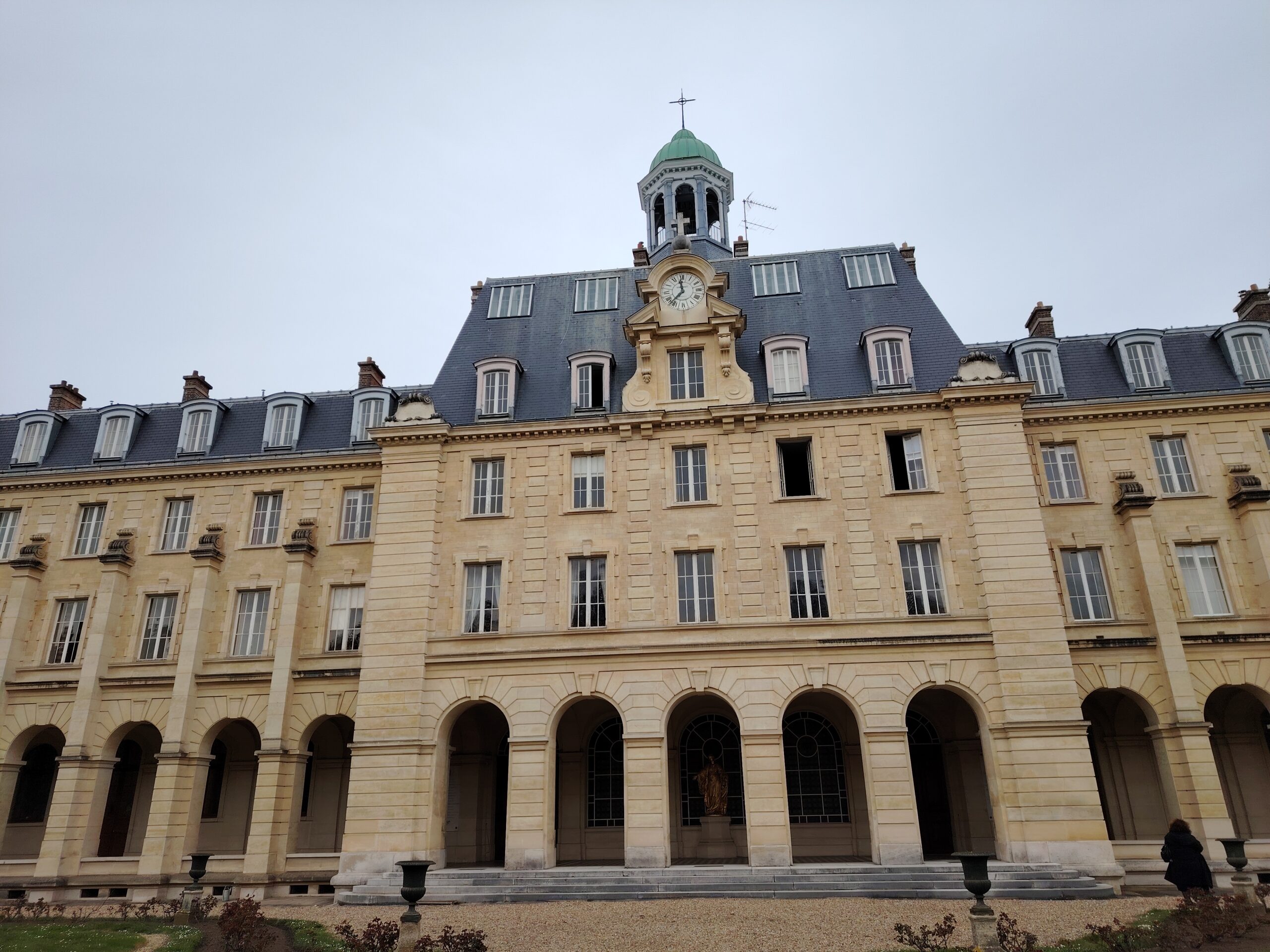
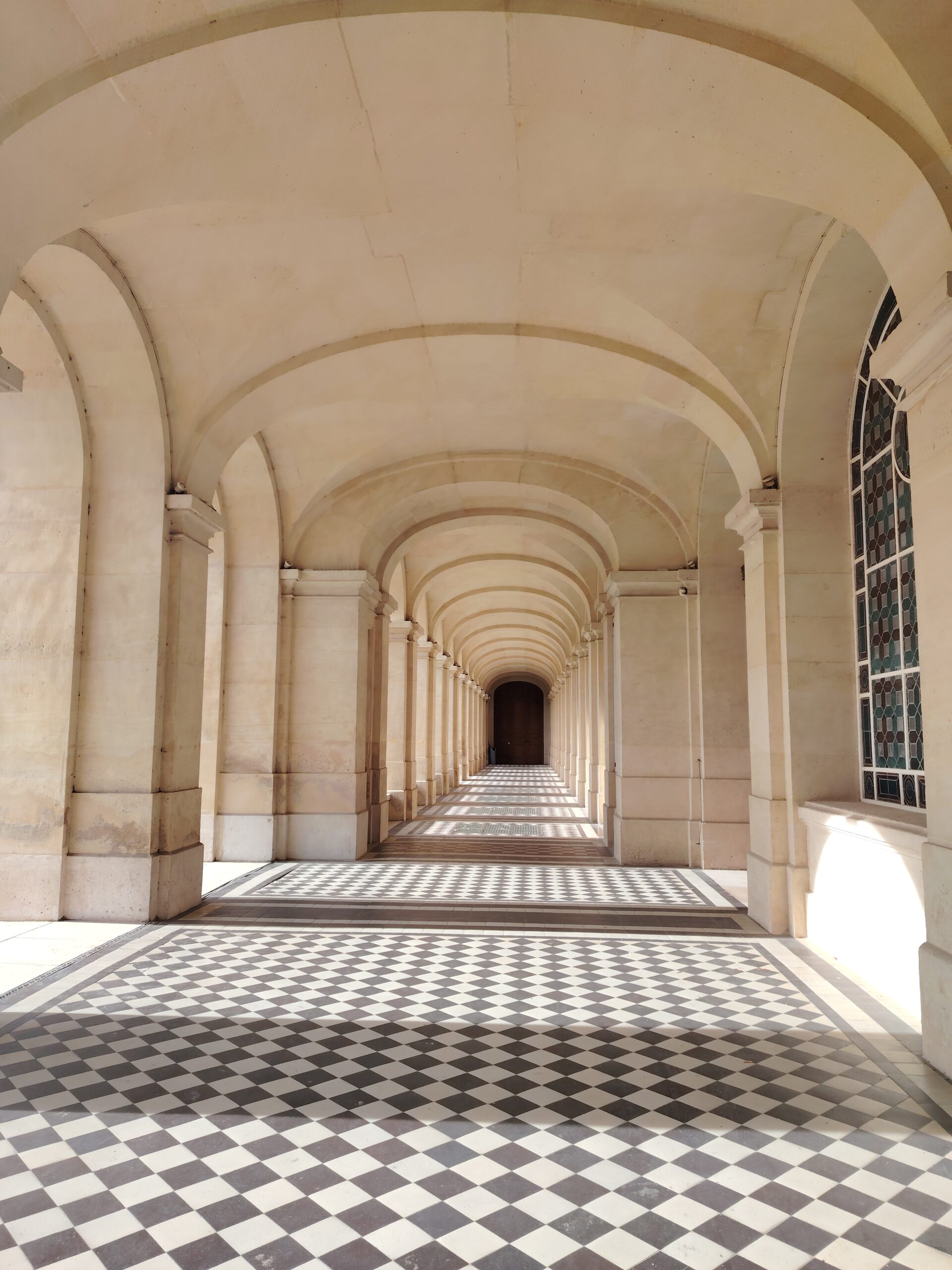
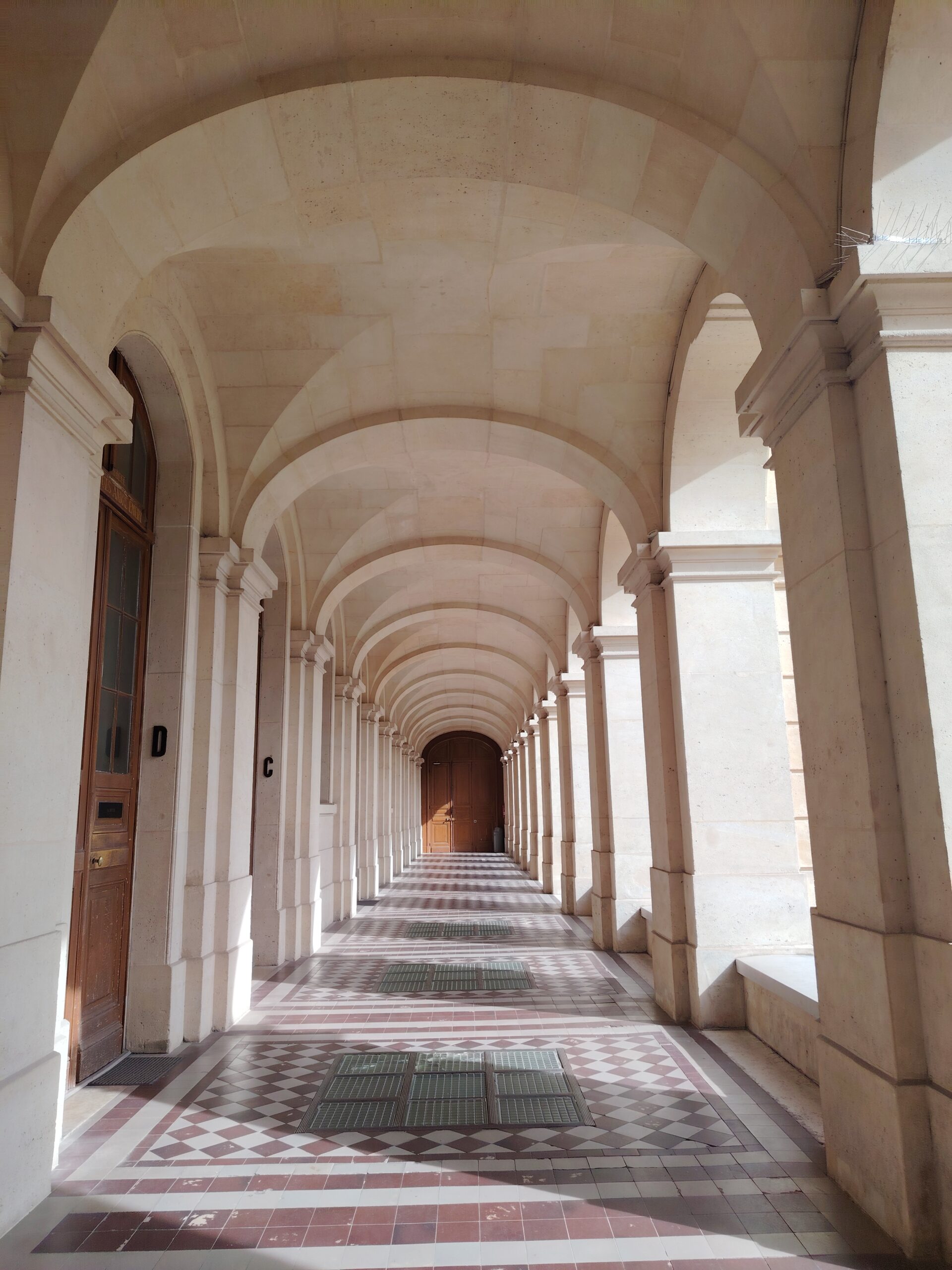
The Saint-Sulpice Seminary is a Catholic seminary and is located in Issy-les-Moulineaux.
From Paris Gare de Saint Lazare metro 12 to Mairie D’issy.
The château known as “Queen Margot’s”, which she occupied from time to time until her death in 1615..
In 1892, it was demolished to make way for the current building, which became the permanent seminary of St Sulpice in 1906, after the closure of the Parisian establishments.
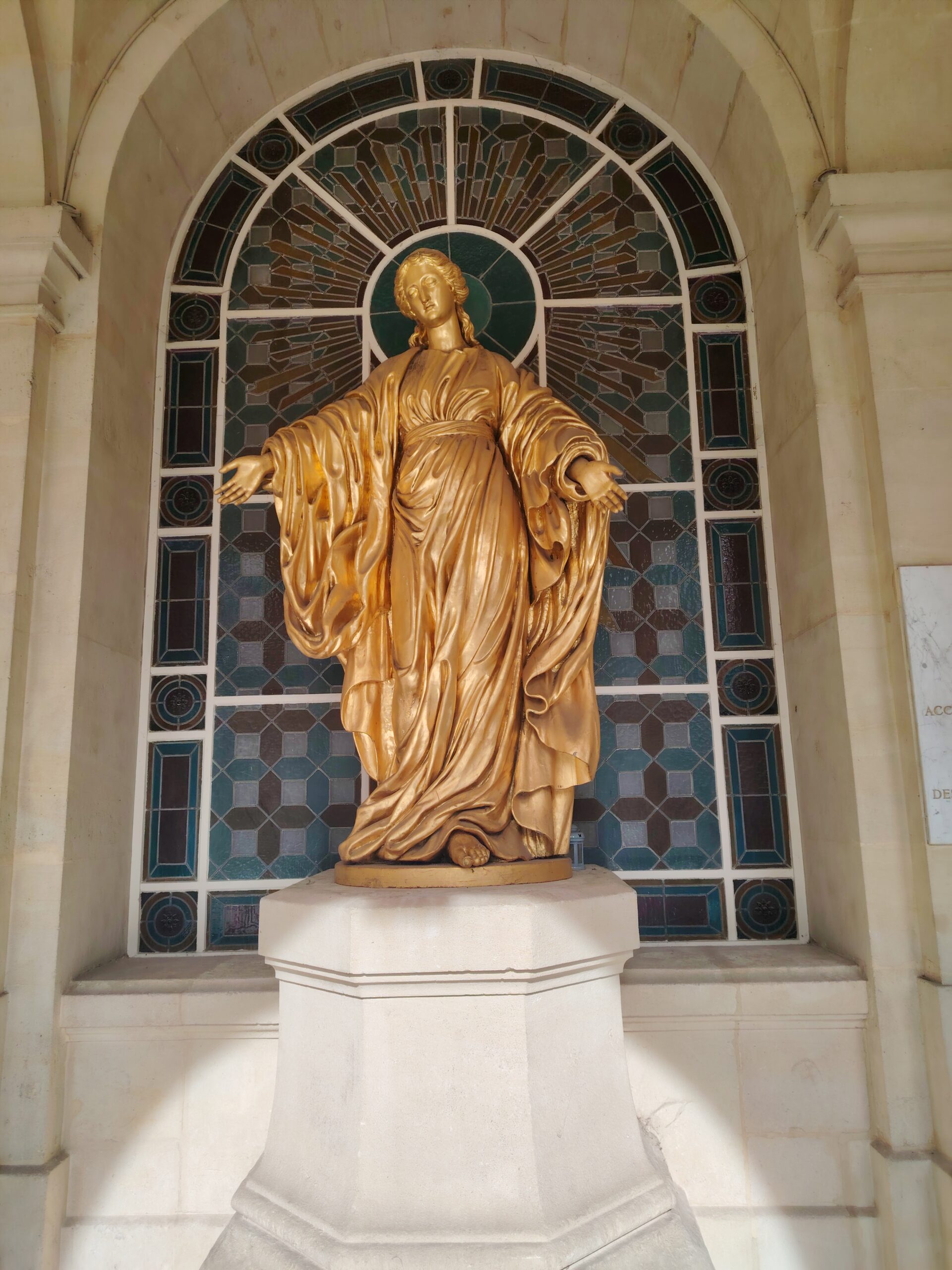
Statue of the Virgin Marie.
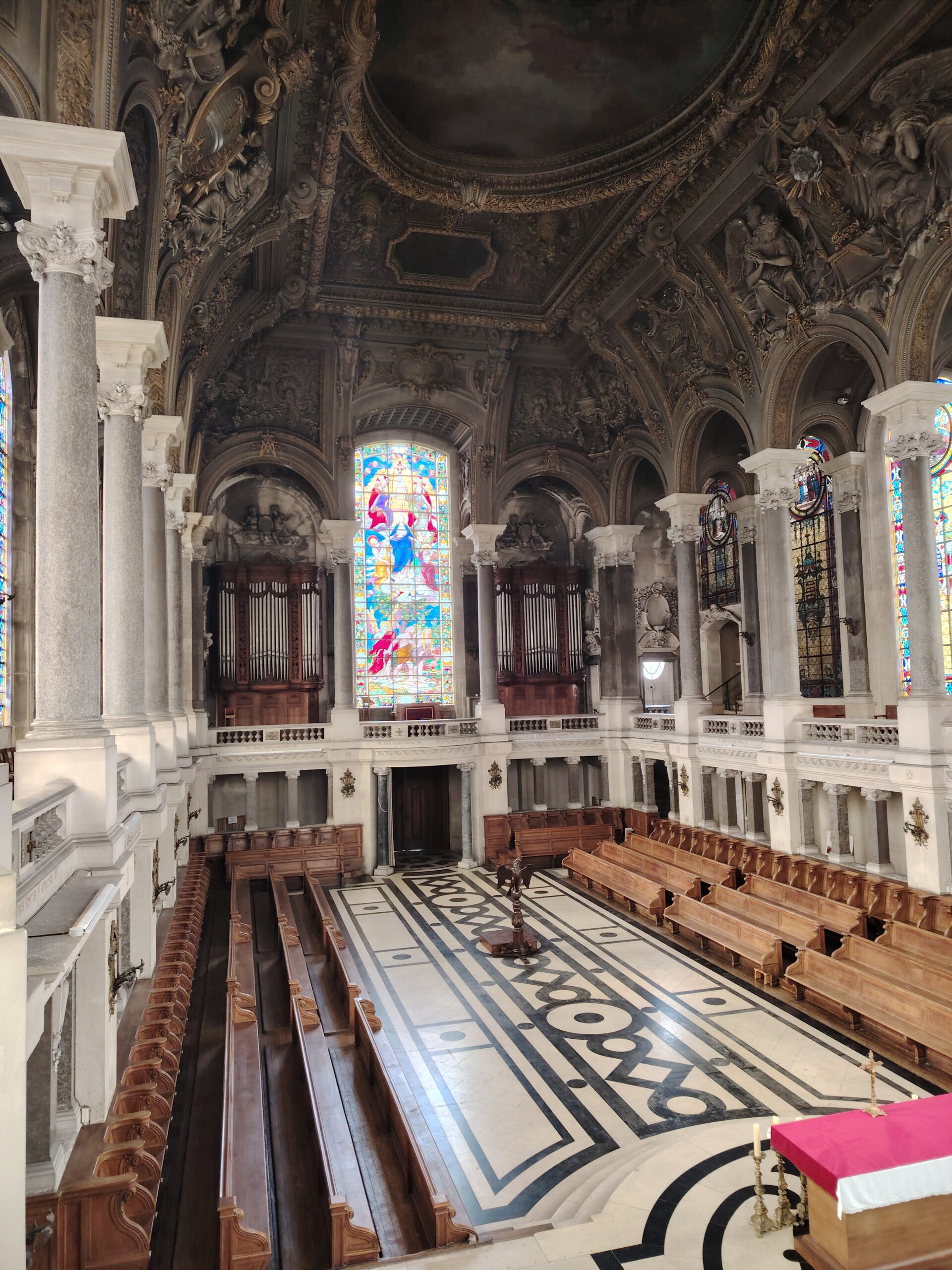
5he Grand Chapel is built between 1898 and 1901.
The organs, built in 1930.
In the inscriptions in the stained glass windows, the scenes in the upper medallions, the symbols depicted in the stuccowork (inspired by the litanies of the Virgin Mary), and the central theme of the large stained glass window in the organ.
The nave.
The altar.
The chapel seen from the first floor.
The choir’s sumptuous décor (with its marble altar and gilded bronze sconces) was donated by Canon Schoeffer, a former pupil of St Sulpice who became a benefactor.
The crypt.
In the crypt of the Grande Chapelle, the following have been transported and reconstructed: the wall of the sentry walk of the Roquette prison, in front of which the hostages were shot by the Paris Commune on 24 May 1871; the cells, with their furnishings, occupied by archbishop Georges Darboy and seminarian Paul Seigneret before their execution.
Paul Seigneret’s cell in the Roquette prison.
Mgr Georges Darboy’s cell in the Roquette prison.
The French garden.
the Italian-inspired nymphaeum, built between 1609 and 1615.
Rocaille detail of the ceiling of the nymphaeum.
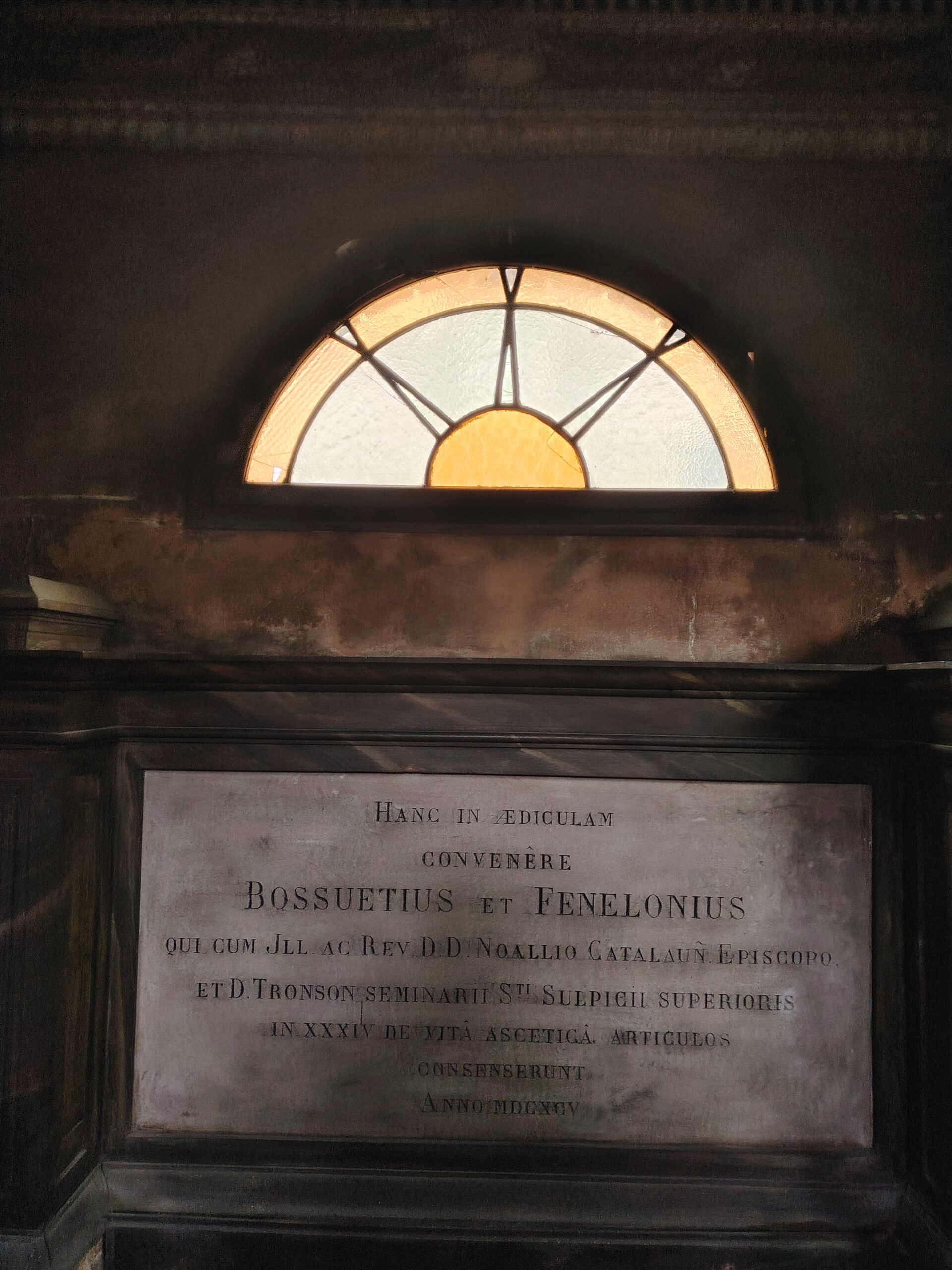
An inscription recalls that it was here that the conference-debates between Fénelon and Bossuet took place in 1695.
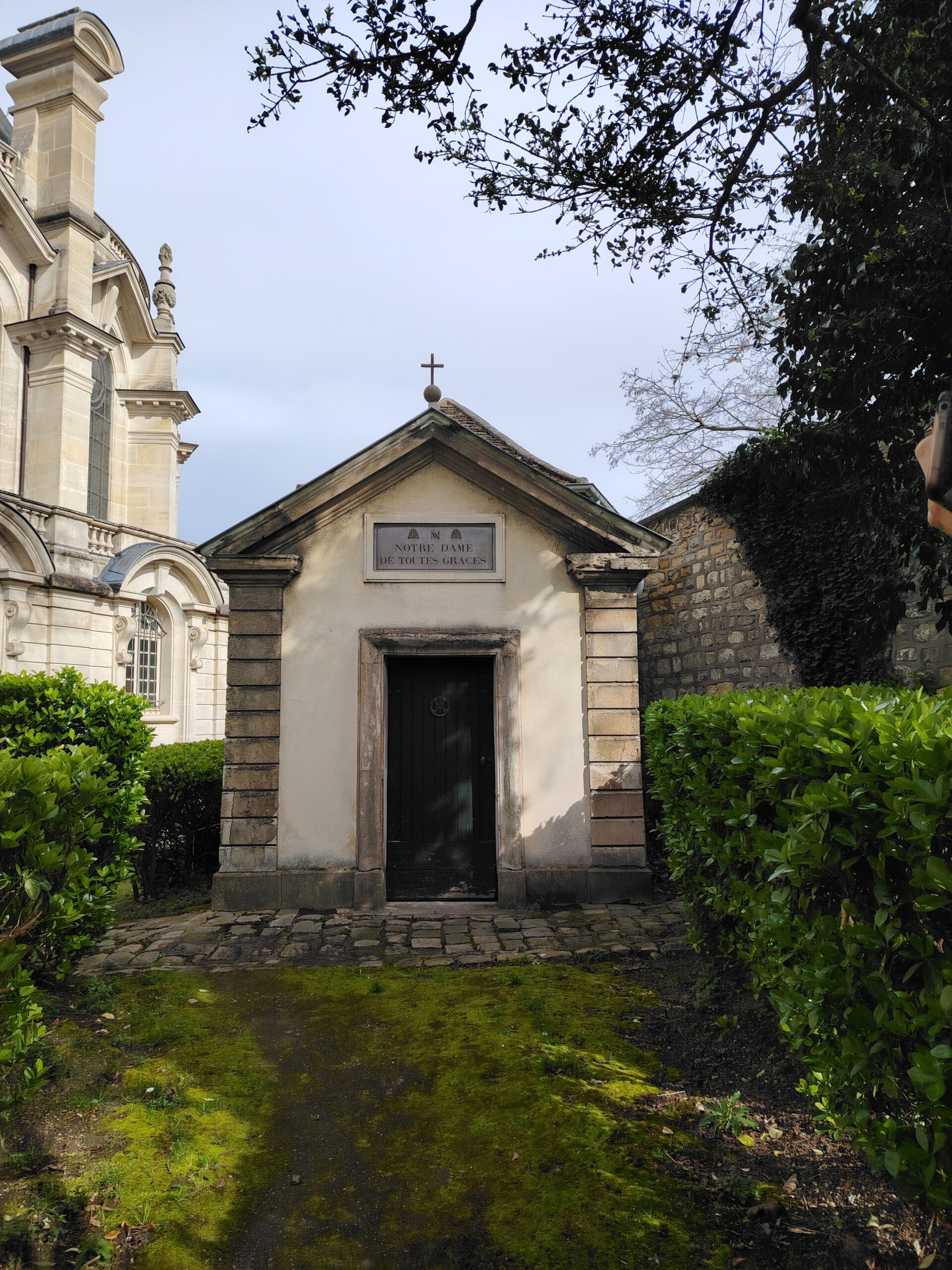
Notre-Dame-de-Toutes-Grâces chapel, built by seminarians in 1808.
Notre-Dame-de-Toutes-Grâces chapel built by seminarians in 1808.
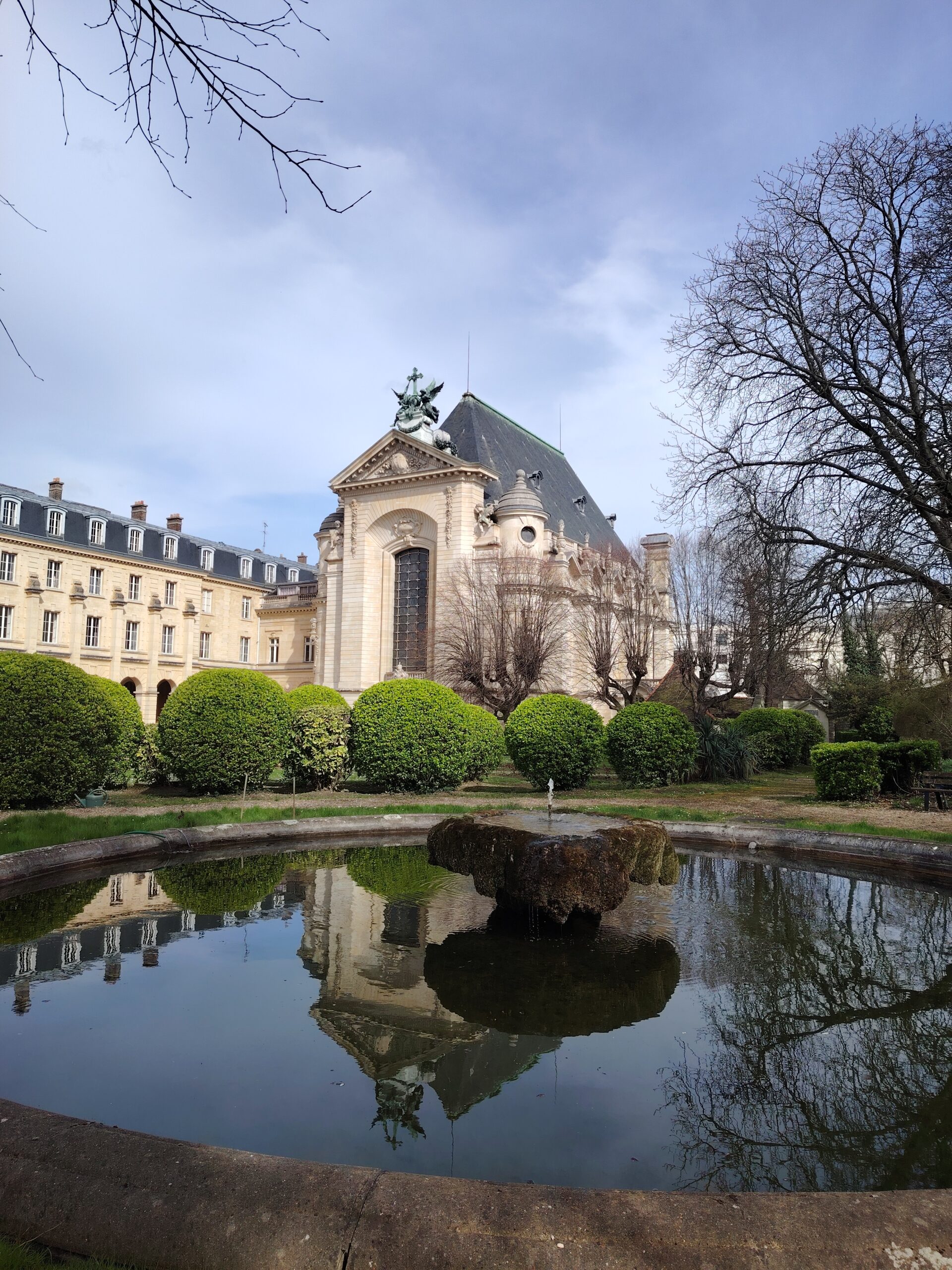
The main seminary building and the large chapel, reflected in the 17th-century circular pool.